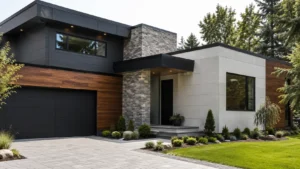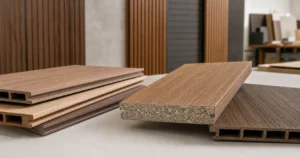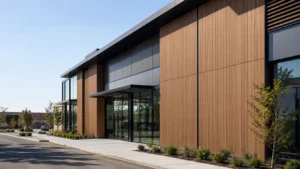
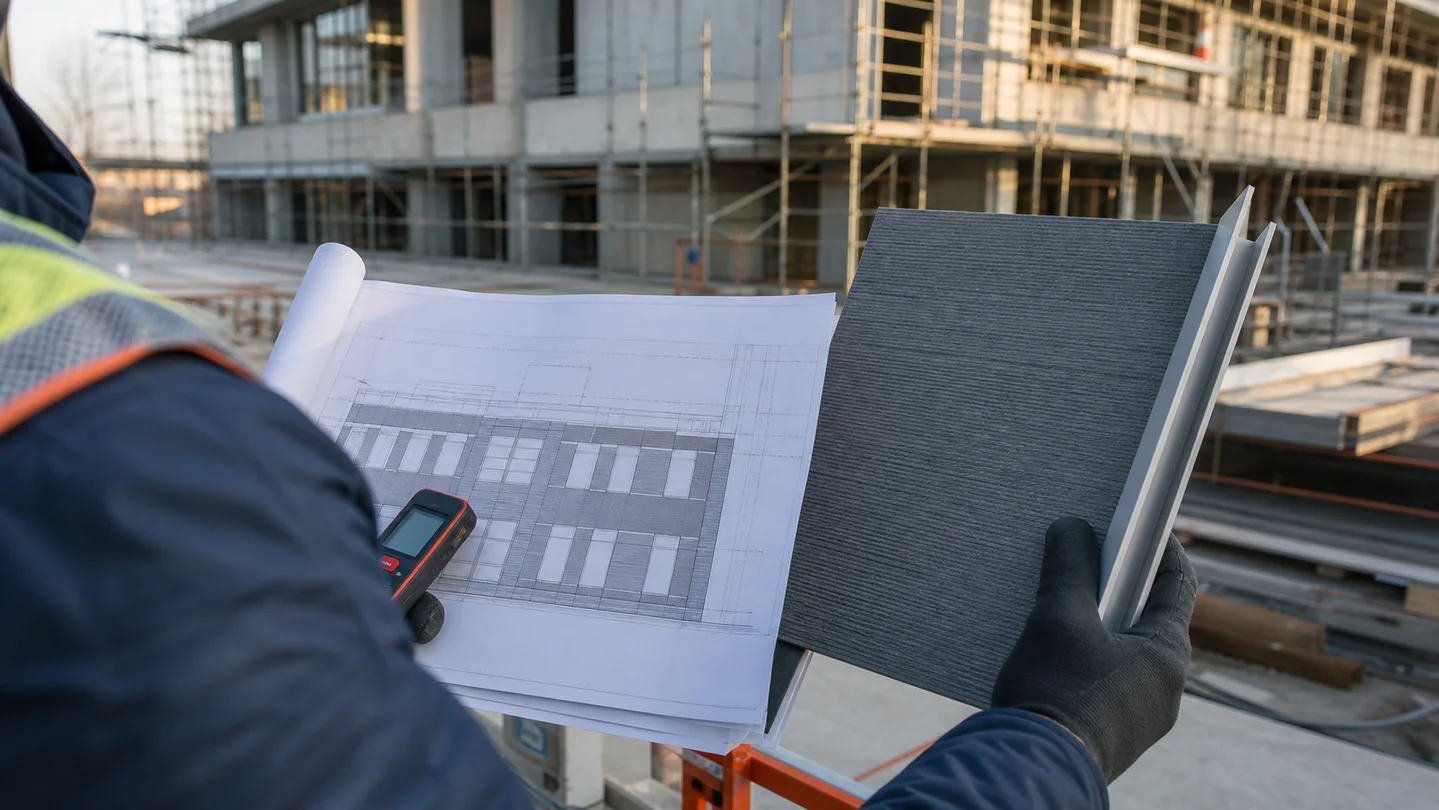
Composite Cladding Cost Guide (2026): WPC Wall Panels Per Square Meter
How much does WPC cladding cost? In the United States, a practical benchmark is approximately $7.50–$9.50 per square foot installed. However, this figure should not be confused with the price of WPC boards alone.
A complete WPC cladding budget usually includes three different costs: the board price, the installed wall-system price, and the importer’s landed cost. A low material quote may exclude clips, subframes, drainage components, flashing, labor, removal, taxes, access equipment, and delivery.
As a B2B decorative building materials manufacturer, WYRAX created this guide to help buyers understand what is included in a WPC cladding quote, identify hidden or omitted costs, and compare suppliers more accurately. For a broader overview of materials, profiles, applications, and installation, read our complete WPC wall panels guide.
Key Takeaways
- PNNL’s US comparison table lists installed WPC at $7.50-$9.50 per sq ft.
- HomeGuide’s 2025 estimate platform reports $4-$12 material-only and $6-$13 labor for composite siding.
- Compare matched scope: board, wall system, installation, then importer landed cost.
Table of Contents
- What Does Composite Cladding Cost Actually Include?
- What Is the 2026 US Cost Range for WPC and Composite Cladding?
- How Do Material, System, and Labor Change the Price?
- How Should Importers Calculate Landed WPC Cladding Cost?
- How Do WPC, Vinyl, Fiber Cement, Wood, and Metal Compare on Budget?
- Why Does Installation Detail Belong in a Cost Guide?
- How Can You Compare Two Cladding Quotes Fairly?
- Frequently Asked Questions
- How much does composite cladding cost per square foot?
- Is WPC cladding cheaper than fiber cement?
- Does a WPC board price include installation?
- How much waste should I order for composite cladding?
- What should an importer include in landed cost?
- Conclusion: Compare Scope Before You Compare Price
- About the author
What Does Composite Cladding Cost Actually Include?
In 2026, a $7.50-$9.50 per sq ft installed WPC reference can only be compared with another price that includes the same work. PNNL’s table labels its figures as installed costs and warns that market conditions, availability, and home complexity change prices. Board-only, installed-cladding, and full wall-system figures answer different questions.
| Price level | It should include | It often excludes |
|---|---|---|
| Material-only | Boards or panels, stated coverage, basic packaging | Clips, trims, subframe, freight, tax, labor |
| Installed cladding | Material, stated accessories, labor, access assumptions | Removal, wall repair, WRB, flashing, permits |
| Complete wall system | Cladding, accessories, drainage layer, flashings, labor and stated logistics | Unstated repairs, code changes, hidden conditions |
| Landed B2B cost | Goods plus logistics to the named destination | Local installation unless stated separately |
Measure net cladding area from elevations. Record openings, then state cut loss as a separate allowance. Never turn floor area into facade area without showing the assumption. For material families and application context, see our composite siding panels guide.
The three-price model is the practical filter that prevents a false comparison. First, identify the board or material price. Second, price the installed exterior wall system. Third, for importers, calculate the landed cost per sellable square foot. If two quotes sit in different layers, they do not compete yet.
What Is the 2026 US Cost Range for WPC and Composite Cladding?
In 2026, PNNL lists wood-plastic composite at $7.50-$9.50 per sq ft installed, fiber cement at $7-$10, vinyl or plastic at $3.50-$8.50, and metal at $10-$25. These are broad category references for US siding, not a price for one WPC profile, one city, or one finished wall assembly.
As a lower-confidence market check, HomeGuide’s How Much Does Composite Siding Cost? says composite siding averages $10-$25 per sq ft installed, $4-$12 for materials, and $6-$13 for professional labor. The article says it tracks contractor estimates, but its range is still an estimate-platform figure.
The difference between those two references is the lesson, not an error to average away. “Composite siding” can describe different products, profiles, warranty terms, wall conditions, and labor markets. A quote becomes useful when it names the SKU, coverage, accessories, installation scope, and date. What would a local installer actually need to complete the elevation?
How Do Material, System, and Labor Change the Price?
In 2026, HomeGuide estimates $1-$4+ per sq ft for old-siding removal, $0.50-$1.50 per sq ft for installed house wrap, and $5-$15 per linear ft for window and door trim. Those figures are non-binding market context, but they show why a board price cannot stand in for a completed facade budget.
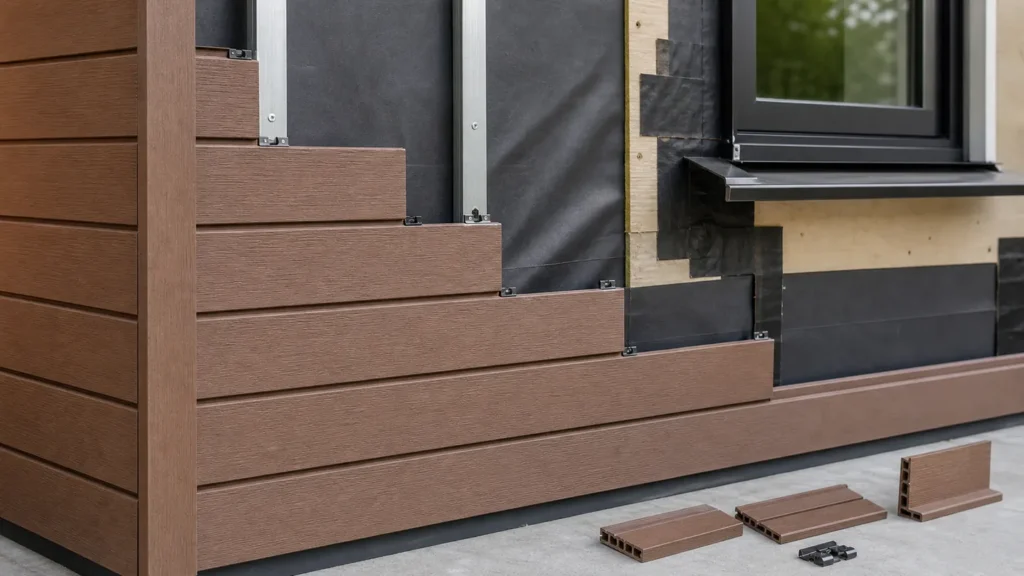
Use this quote-audit list before you compare a supplier figure with a contractor figure:
- Exact board, profile, cap construction, finish, and sellable coverage.
- Clips, fasteners, battens or metal subframe, and all trims or corners.
- Water-resistive barrier (WRB), flashings, drainage cavity, and transitions.
- Cut allowance, access equipment, removals, repairs, debris, and contingency.
- Freight, taxes, permits, labor, warranty process, and exclusions.
In May 2025, the U.S. Bureau of Labor Statistics reported 6.4 million construction and extraction jobs and a $65,360 annual mean wage for that broad occupational group. That does not convert to a siding labor rate. It does underline why labor conditions vary across states and metros.
A quote with fewer lines is not necessarily cheaper. It may simply move risk into exclusions. Mark each line as included, excluded, or allowance. The most comparable quote is usually the one that makes its unknowns visible before the order, not the one that presents the smallest headline number.
How Should Importers Calculate Landed WPC Cladding Cost?
In 2026, the International Trade Administration states that Incoterms 2020 contains 11 rules that allocate tasks, costs, and risks between buyer and seller. Landed cost therefore begins with the named Incoterm, not the factory board price. It ends only when the goods reach the buyer’s stated destination in sellable condition.
Use this fill-in calculation:
landed cost per sellable sq ft = (product + packaging + freight + insurance + duty/tax + clearance + inland delivery + loss allowance) / sellable covered area
Product construction, origin, destination, classification, Incoterm, shipment date, container utilization, and insurance terms can change the result. The United States International Trade Commission explains that the Harmonized Tariff Schedule uses a hierarchy of descriptions and rates. Its current search tool and CBP guidance should be checked against the actual product and entry, not guessed from the word “WPC”.
Ask a licensed customs broker or qualified forwarder for live classification, duty, entry, and port figures. CBP says an importer remains responsible for compliance even when a broker is used. When it is live, the planned wholesale guide should provide the next sourcing step; do not link to a planned page before it exists.
How Do WPC, Vinyl, Fiber Cement, Wood, and Metal Compare on Budget?
In 2026, The installed ranges overlap for WPC at $7.50-$9.50 and fiber cement at $7-$10, while vinyl or plastic spans $3.50-$8.50 and metal spans $10-$25. The lowest board figure is not automatically the lowest project cost. Screen code requirements, drainage, access, maintenance, and appearance on the same scope.
WPC high for impact and pest resistance, but low for fire resistance. That is a category-level screen, not a certificate for your board or wall. WYRAX advises following the manufacturer instruction for the exact product and checking any applicable ICC evaluation report for fasteners, flashings, clearances, and joints.
For a direct material-family comparison, see WPC vs ACM vs composite siding. For a wider shortlist that includes wall-panel types and uses, see exterior wall panel materials. A cheaper material can require a more demanding system; a higher board price can reduce a different project risk. Neither shortcut removes the need for product documents.
Why Does Installation Detail Belong in a Cost Guide?
PNNL defines sustained moisture contact in its table as at least 72 hours and says all siding should be assumed to leak during service. That is why an exterior-cladding quote must show the drainage plane, WRB, flashings, cavity, and compatible fasteners. Leaving these items out does not make the wall system free; it makes the scope incomplete.
A WRB is the water-control layer behind the cladding. A rainscreen is the gap or air space that provides drainage and drying behind the exterior face. PNNL notes that the gap may be made with furring, a drainage mat, or textured house wrap. The required dimension and detail depend on the cladding, wall, climate, code, and exact installation manual.
Do not let this guide replace an engineered detail or the manufacturer’s manual. Instead, ask whether the quote includes the drainage and transition items it assumes. Ask how windows, penetrations, corners, bottom terminations, and movement are handled. A price that ignores the interfaces has not yet described the real installation.
The quote line that deserves the most scrutiny is often the quietest one: “accessories included.” Request an accessory bill with quantities. It turns a vague promise into a checkable scope and makes an apples-to-apples comparison possible across suppliers and installers.
How Can You Compare Two Cladding Quotes Fairly?
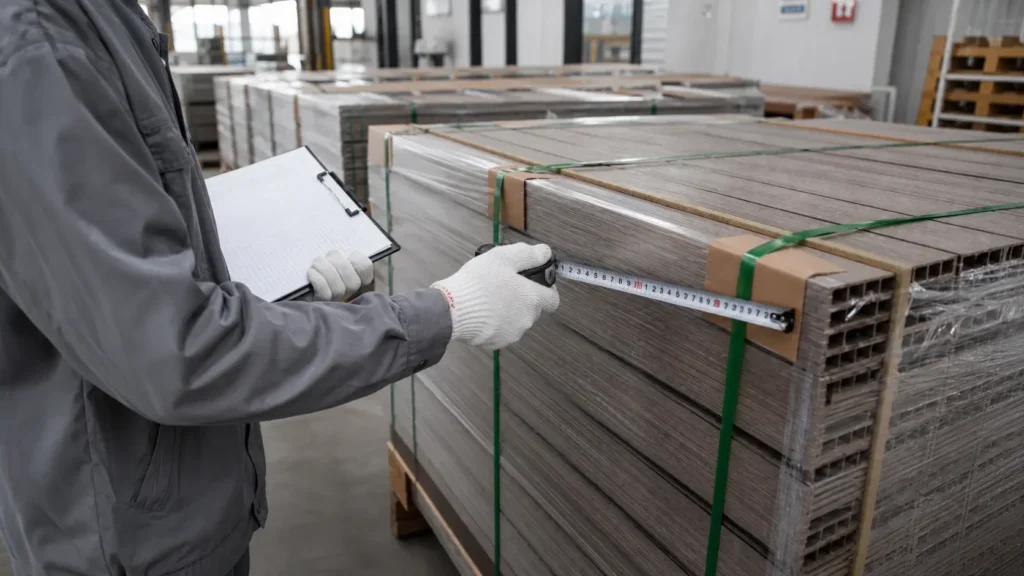
The fair comparison is not quote A versus quote B. It is the same elevation, product coverage, accessories, wall preparation, labor access, and date in both documents.
Copy this compact worksheet into your quote request:
| Check | Quote A | Quote B |
|---|---|---|
| Exact SKU, profile, cap, finish, and coverage | ||
| Net facade area, openings, and separately stated cut allowance | ||
| Clips, fasteners, subframe, trims, and corners | ||
| WRB, flashings, cavity, and transitions | ||
| Removal, repair, scaffolding, access, and labor | ||
| Freight, tax, permit, delivery point, and Incoterm | ||
| Test documents, code review, and warranty claim route | ||
| Quote date, validity, exclusions, and contingency |
For a WYRAX project-specific bill of materials, provide the location, exterior net area, elevations, target profile and finish, fire or code requirement, desired Incoterm, and delivery point. We can then identify the relevant material and logistics assumptions rather than present a misleading one-size price. Need a foundation first? Read what WPC is and how it is specified.
Frequently Asked Questions
How much does composite cladding cost per square foot?
PNNL lists wood-plastic composite at an indicative $7.50-$9.50 per sq ft installed in its US comparison table. A current local quote can differ because the product, subframe, access, removal, drainage scope, labor market, and delivery conditions differ.
Is WPC cladding cheaper than fiber cement?
The broad installed ranges overlap: $7.50-$9.50 for WPC and $7-$10 for fiber cement. Compare the precise product, required fire or code documents, water-control scope, local labor, finish, and maintenance plan. A generic range cannot decide a project-specific material selection.
Does a WPC board price include installation?
Usually, no. We estimate separates $4-$12 material-only from $6-$13 professional labor per sq ft for composite siding. Ask whether clips, subframe, WRB, flashing, access, freight, taxes, removal, and repairs are also included. A board price and an installed price should never be compared as if they are the same scope.
How much waste should I order for composite cladding?
There is no defensible universal percentage. Calculate cut loss from elevations, layout direction, openings, corners, panel lengths, offcuts, damage allowance, and spare-board policy. State it as its own quantity and cost line. That protects the comparison from hiding waste inside a material rate and lets each supplier explain its coverage assumptions.
What should an importer include in landed cost?
Include product, packaging, freight, insurance, duty or tax, clearance, inland delivery, and a loss allowance, then divide by sellable covered area. The named Incoterm sets the responsibilities and costs each side carries. Check classification and current rates against the exact goods in the HTS, rather than relying on a historic quote.
Conclusion: Compare Scope Before You Compare Price
In 2026, the practical answer is not one WPC price per square foot. PNNL’s $7.50-$9.50 installed WPC reference is a sound starting benchmark, but the buying decision comes after you match the board, installed wall system, and landed-cost scope. Date every quote. List exclusions. Verify product documents and assembly details before an order is placed.
Begin with the same elevation and the same quote worksheet for every bidder. Then ask for a project-specific bill of materials that identifies coverage, accessories, drainage, logistics, and exclusions. That process creates a cost comparison a contractor, distributor, specifier, or importer can actually use.
About the author
Peter Smith, Marketing Specialist at WYRAX. Peter writes for distributors, contractors, importers, OEM buyers, and specifiers comparing decorative building materials for wall, floor, and ceiling projects. This article should receive named technical review before it makes any SKU, test-report, fire, installation, or warranty claim.